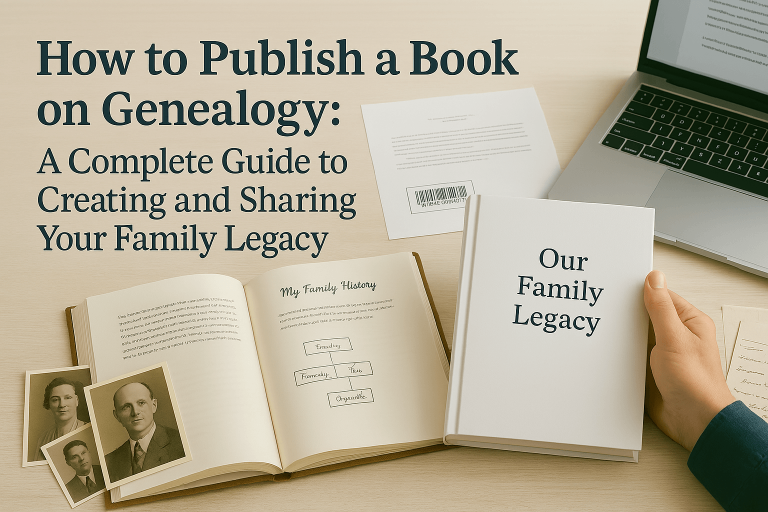
A family tree can tell you that someone lived and show how generations connect. From that strong starting point, you can begin exploring how they laughed, what frightened them, why they left home, or what they refused to surrender.
Names, dates, marriages, and places give a family history its structure. They are essential. But a legacy is the meaning carried through that structure.
If future generations inherit a chart, they gain a valuable map of who belonged to whom. From there, they can continue the research, add family stories, or build a fuller framework around the people themselves.
A Tree Creates the Foundation for the Story
A family tree records relationships efficiently. It can show that your great-grandmother had six children, that the family crossed an ocean, or that two branches reunited through marriage.
The tree may not explain which child kept everyone together after a death, whether the crossing followed political unrest, or whether the marriage brought two rival families together. Those are stories that further research and family testimony can help uncover.
The person represented by one small box may have built a business, survived a war, raised siblings, hid a grief, or carried a tradition into a new country. Those stories often need more space than a birth date can provide.
A tree is a map, and often an excellent starting point. Legacy grows when you ask what happened along the road.
Facts Need Human Context
Records often describe lives in official language. “Occupation: laborer.” “Residence changed.” “Widowed.” “Naturalized.”
Behind each phrase is a human event. A job may have supported ten relatives. A move may have followed eviction or opportunity. Widowhood may have changed the family’s finances. Citizenship papers may represent years of uncertainty.
This is one way ancestry research services can build on an existing lineage. Strong research places records beside local history, migration patterns, laws, economic conditions, and family testimony. Context turns a fact from a label into an experience.
The question is not simply, “What happened?” It is, “What did this require of them?”
Memory Adds What Records May Not Capture
Public records rarely capture humor, habits, family language, private rituals, or moral choices.
They do not record the song a grandfather sang while repairing shoes, the aunt who quietly paid school fees, or the recipe adjusted after ingredients became scarce. They miss the details that made a family recognizable to itself.
Interview relatives while those details are still reachable. Ask about ordinary days, not only major events. What did the kitchen smell like? Who arrived early? Which object was never thrown away?
Small details are often what make a person visible again.
Legacy Includes Tension, Not Only Triumph
Families often preserve flattering stories and soften the rest. That instinct is understandable, but a legacy polished beyond recognition teaches very little.
A meaningful family history may include estrangement, failure, migration under pressure, financial loss, prejudice, illness, or choices later generations struggle to understand. These subjects require care and proportion. They do not require pretending they never happened.
Honest storytelling does not mean exposing every private detail. It means resisting the urge to turn ancestors into symbols. People can be brave and difficult, generous and flawed.
Future readers deserve people, not monuments.
A Book Creates Continuity
A family tree is a valuable reference that can be consulted across generations. A story gives readers another way to enter that history.
In a book, a reader can follow a decision across decades, compare photographs, read part of a letter, study a map, and understand how one generation shaped the next.
People searching for a family tree books publisher may already have a carefully researched tree, along with photographs, oral histories, certificates, and unanswered questions that they want to bring into one coherent work.
The process of creating a family history book requires choices about scope, voice, evidence, privacy, structure, and visual material. Those choices can help the result become both a useful family reference and a living account of the family.
Publishing Should Serve the Story
Different families need different books. One may follow a maternal line. Another may center on migration, military service, a family business, or a shared home.
Thoughtful family tree publishing connects the visual record with the narrative. Trees, timelines, maps, documents, captions, and photographs should help the reader move through the history rather than compete for attention.
Experienced genealogy book publishers understand that research is rarely complete. Gaps should be acknowledged, conflicting accounts handled transparently, and sources organized so future relatives can continue the work.
At Legacy Books, we support families through research, interviewing, writing, multimedia integration, custom design, and printing, allowing the final book to reflect the family rather than a standard template.
Build on What Your Family Tree Preserves
Your descendants may be able to recover a date. They may find a census line or marriage certificate. What they cannot recover easily is the explanation only your generation knows.
They need to know why the family moved, what was carried forward, what was lost, and which choices still shape them. A family tree tells future readers where they came from. A family story gives them someone to meet when they arrive.