Every family has stories that seem permanent because someone is always telling them. The funny one about the uncle who bought the wrong house. The serious one about the grandmother who started over with nothing. The one about the first business, the first home, the first loss, the first brave decision. They come out during holidays, birthdays, late-night tea, Sunday dinners, and casual conversations that no one thinks to record.
Then one day, the person who tells the story is no longer at the table. That is when families often realize how much was being carried by memory alone. Names become fuzzy. Dates disappear. The smaller details fade first, and then the meaning starts to loosen too. This is why we believe preserving family legacy matters. It is about keeping the voice, personality, lessons, and lived experience of a family from slipping away quietly.
Family Stories Are More Than Entertainment
Dinner table stories often sound casual, but they carry more weight than people realize. They explain how a family thinks. They reveal what people survived, what they valued, what mistakes shaped them, and what moments changed the direction of everyone who came after.
A story about moving to a new country may also be a story about courage. A story about a failed business may also be a lesson about resilience. A story about a grandmother’s cooking may also be a record of culture, love, and belonging.
When those stories are only spoken, they depend on someone remembering them accurately. That can work for a while, but memory is not a filing cabinet. It edits without asking permission. A written legacy gives those stories a stronger place to live.
The Small Details Are Usually the First to Go
Families often remember the big events. Births, marriages, migrations, major losses, and business milestones are easier to track.
The smaller details are more fragile.
The way someone laughed before telling a joke. The phrase a grandfather repeated when things got hard. The recipe that was never measured. The reason a family left one town for another. The childhood nickname that made no sense to outsiders. The tradition everyone follows but no one can explain anymore.
These details may seem minor, but they are often what make a family history feel alive. A timeline can tell future generations what happened. A story tells them what it felt like to be there.
A Legacy Book Gives the Family a Shared Reference Point
Without written records, family history can become scattered across different people. One cousin remembers part of a story. An aunt remembers a different version. A parent knows the lesson but forgot the setting. Someone else has the photos but not the names. Over time, the family archive becomes a puzzle with pieces stored in different houses.
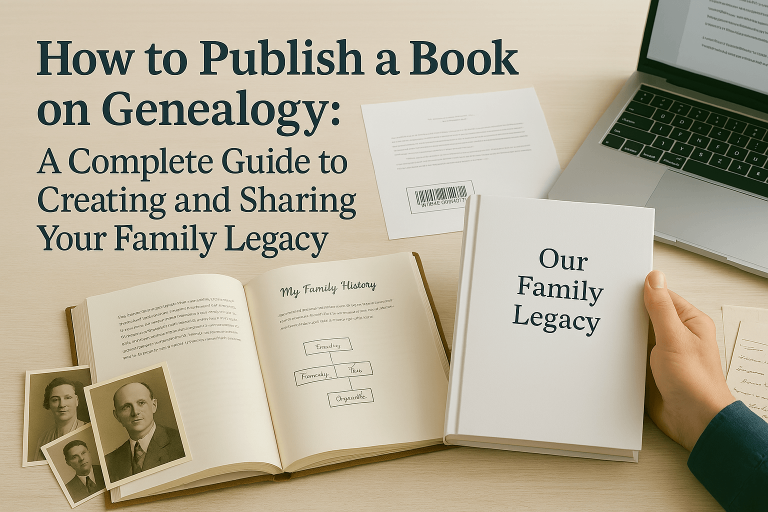
A legacy book helps bring those pieces together. It creates one place for stories, photos, memories, reflections, and milestones. It gives the family something to revisit, pass down, and add meaning to over time. Most importantly, it helps prevent the loss that happens when stories are left only to chance.
This is one of the clearest benefits of preserving family legacy through professional storytelling. The memories become organized without losing their warmth.
Future Generations Need More Than Names and Dates
Genealogy is valuable, but it does not always answer the questions people care about most. A family tree can show who came before. It cannot always explain what they were like. It cannot show how they spoke, what they feared, what they hoped for, what they taught their children, or what they believed was worth protecting. Future generations may want to know:
- What kind of person was my great-grandmother?
- Why did our family move?
- What did our parents or grandparents learn the hard way?
- Which traditions mattered most?
- What did success mean to them?
- What values kept the family together?
These answers rarely come from documents alone. They come from stories.
Professional Storytelling Helps Preserve the Voice
Writing family history is not the same as copying facts into a document. The story needs structure. It needs flow. It needs emotional honesty without turning every moment into drama. It needs to sound like the family, not like a textbook. That is where professional storytelling makes a difference.
At Legacy Books, our work is about capturing not just what happened, but the meaning behind it. We shape memories into a book that feels personal, readable, and worthy of being passed down.
A strong legacy book can include life stories, family milestones, personal reflections, photographs, values, business history, lessons learned, and the moments that shaped generations.
The Dinner Table Will Not Always Stay the Same
One day, the chairs around the table change. People move away. Families grow. Elders pass on. Traditions shift. The stories may still be mentioned, but sometimes with fewer details each year.
Writing them down gives the past a place in the future. The stories around the dinner table deserve that kind of care. They deserve to be gathered, shaped, and preserved while they can still be told fully.
If your family has stories that should not disappear, now is the right time to begin. Legacy Books helps families turn memories, milestones, and personal histories into beautifully written legacy books. Contact us at Legacy Books today to start preserving your family legacy with care, clarity, and meaning.